
Case (![[personal profile]](https://www.dreamwidth.org/img/silk/identity/user.png) case) wrote in
case) wrote in ![[community profile]](https://www.dreamwidth.org/img/silk/identity/community.png) fandomsecrets2023-09-29 07:12 pm
fandomsecrets2023-09-29 07:12 pm
case) wrote in fandomsecrets2023-09-29 07:12 pm


[ SECRET POST #6111 ]
⌈ Secret Post #6111 ⌋
Warning: Some secrets are NOT worksafe and may contain SPOILERS.
01.

__________________________________________________
02.

__________________________________________________
03.

__________________________________________________
04.

__________________________________________________
05.
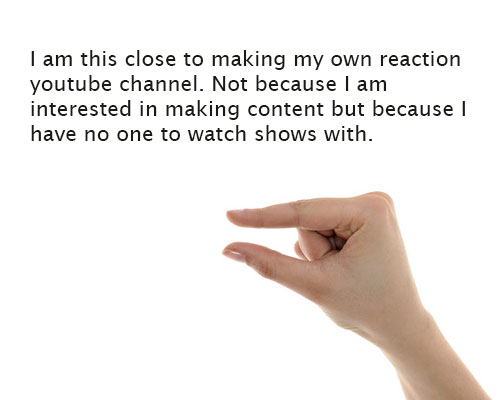
__________________________________________________
06.

__________________________________________________
07.

__________________________________________________
08. [OP requested warning for vomiting]

__________________________________________________
09. [WARNING for discussing of rape]

[The Division]
Notes:
Secrets Left to Post: 00 pages, 00 secrets from Secret Submission Post #873.
Secrets Not Posted: [ 0 - broken links ], [ 0 - not!secrets ], [ 0 - not!fandom ], [ 0 - too big ], [ 0 - repeat ].
Current Secret Submissions Post: here.
Suggestions, comments, and concerns should go here.
no subject
(Anonymous) 2023-09-30 02:01 am (UTC)(link)no subject
(Anonymous) 2023-09-30 04:03 am (UTC)(link)https://en.wikipedia.org/wiki/Appeal_to_nature
We are also an incredibly collaborative and pro-social species. Without our natural inclination to form social bonds and communities and look after each other, we wouldn't have civilisations at all. Why should we defend and lean into our aggressive instincts and not our prosocial instincts? What defines who is or isn't "our people"?
no subject
(Anonymous) 2023-09-30 01:50 pm (UTC)(link)We live on a planet with finite, unevenly distributed resources. Among those resources is habitable land, the amount of which is going to continue to shrink as the climate changes. As long as this is the case, we are going to come into conflict with one another, no matter how "pro-social" we claim to be. Yes, we do collaborate, and form communities - but the attachment we form to those communities itself drives our aggressive impulses, as we want to protect those within them from perceived threats; and we are more than happy to secure more resources for them at the expense of a competing community. War is in fact a byproduct of our social nature, and the intense bonds we form with members of our tribes.
"Our people" means "our community/country." It's a nice thought, the notion some have that the entire world could be "our people," but few are willing to give up the comforts of modernity in order to achieve that. Is it "pro-social" that we all now have a device in our pocket whose battery was made with cobalt that was mined by children, children who may have died to get it? Is it "pro-social" that, when we buy fish, or a cheap can of cat food, it's pretty damn good odds we're benefiting from a brutal modern-day form of slavery, a slavery that no country on the planet has any will to end due to its profitability? These are but two examples; so much of our lives are only made possible through exploitation, and we clearly, as a whole, do not think of the exploited as "our people."
But, okay, let's say we decide that we're going to consider every single human being on the planet as part of "our people," in the name of ending exploitation and war. We can't keep our current lifestyle, because it can't be sustained without treating some as lesser; and because, both for that reason and due to the aforementioned finite resources, it can't be guaranteed for everyone. How do we get people to peacefully give up what they have? How do we get people who for years held onto the hope of entering into the global middle class to peacefully accept that, while others got to experience it, they never will, because we've decided to be "pro-social" and disallow it? How do we decide who gets to live in the nicest areas - the ones with the best land, the best weather, the fewest natural disasters - and how do we convince those who must live elsewhere to peacefully accept their lot?