
Case (![[personal profile]](https://www.dreamwidth.org/img/silk/identity/user.png) case) wrote in
case) wrote in ![[community profile]](https://www.dreamwidth.org/img/silk/identity/community.png) fandomsecrets2023-08-31 05:58 pm
fandomsecrets2023-08-31 05:58 pm
case) wrote in fandomsecrets2023-08-31 05:58 pm


[ SECRET POST #6082 ]
⌈ Secret Post #6082 ⌋
Warning: Some secrets are NOT worksafe and may contain SPOILERS.
01.

__________________________________________________
02.

__________________________________________________
03.

__________________________________________________
04.

__________________________________________________
05.

__________________________________________________
06.

__________________________________________________
07.
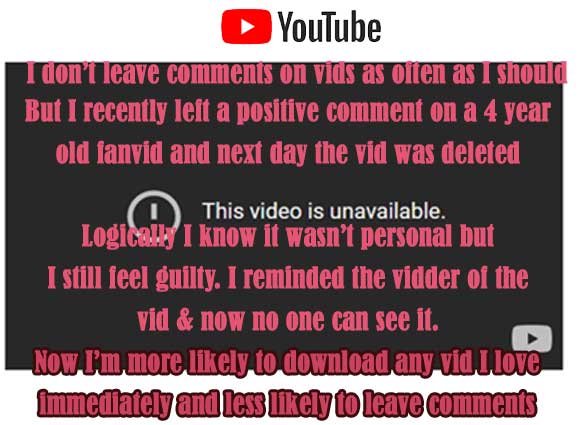
Notes:
Secrets Left to Post: 01 pages, 06 secrets from Secret Submission Post #869.
Secrets Not Posted: [ 0 - broken links ], [ 0 - not!secrets ], [ 0 - not!fandom ], [ 0 - too big ], [ 0 - repeat ].
Current Secret Submissions Post: here.
Suggestions, comments, and concerns should go here.
no subject
(Anonymous) 2023-09-01 08:09 pm (UTC)(link)Situational anxiety is an emotion. It's not a condition. It's a healthy biological response to a situation in the environment. It doesn't have a "cure" because there's nothing that needs curing. That's like saying there's a cure for feeling annoyed.
There's a difference between "I feel anxiety right now/for this situation" and "I HAVE anxiety". HAVING anxiety is not a response to a situation in the environment.
no subject
(Anonymous) 2023-09-02 06:20 am (UTC)(link)no subject
(Anonymous) 2023-09-02 07:06 am (UTC)(link)There is no judgement value between anxiety (the emotion) and anxiety (the mental illness). One is no less "anxiety" than the other. It becomes a mental illness when you can't control when/how you become anxious and it effects your quality of life. If your anxiety is from environmental factors, it's not the anxiety effecting your quality of life - it's the thing making you anxious. If your anxiety is from your brain misfiring, well, we don't know why it does that and we don't know how to fix it. This is why anxiety (the mental illness) has no cure (yet). There is no way to "resolve the situation causing anxiety" because when you have anxiety (the mental illness) there IS NO SITUATION CAUSING IT. That's what makes it a mental illness.
We don't say that people who turn doorknobs twelve times when opening a door are OCD because of the action they're taking, and therefore people who wash their hands until they bleed AREN'T OCD - because it's not the ACT that is the problem. They're both OCD because of the loss of control over one's self. It's not the emotion you're feeling, or the specific act you're compelled to do - it's the loss of control over yourself. Feeling emotions in response to stimulus is normal. Feeling emotions randomly with no precipitating cause is not.